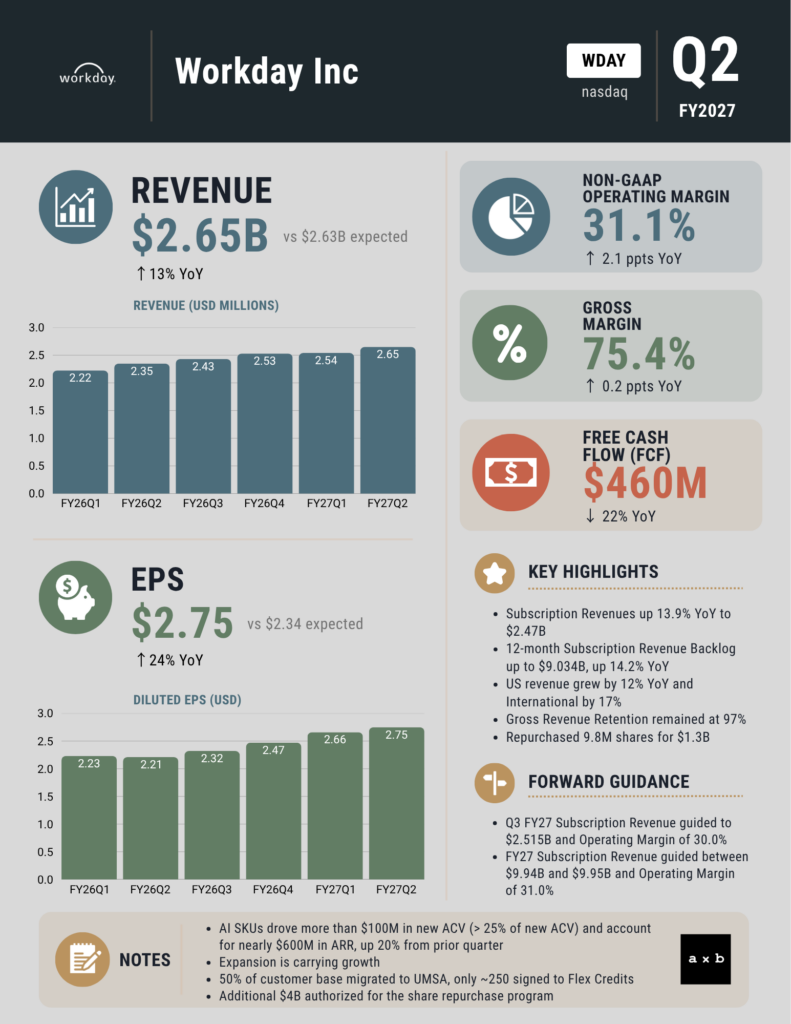

Workday Inc (NASDAQ:WDAY) delivered an impressive Q2 for fiscal 2027, with total revenue rising 12.8% year over year to $2.65 billion, ahead of the $2.63 billion expected. Subscription revenue climbed 13.9% to $2.47 billion, while non-GAAP operating income grew to $824 million, translating to a 31.1% non-GAAP operating margin, up from 29.0% a year ago. Non-GAAP EPS reached $2.75, comfortably beating estimates.
Management raised full year fiscal 2027 guidance to subscription revenue of $9.94 billion to $9.95 billion, growth of 13%, while boosting non-GAAP operating margin guidance to 31.0%. For Q3, Workday projects subscription revenue of approximately $2.515 billion, up 12%, with non-GAAP operating margin of about 30%. This double-digit expansion was not driven by seat growth alone, but by core execution plus an emerging AI monetization layer.
The strength in AI SKUs highlights the structural shift underway. AI products drove more than $100 million of new ACV, over 25% of all new ACV in the quarter, with AI ARR now nearly $600 million, up more than 200% year over year. More than 5,500 customers now use one or more organic agents, up 35% quarter over quarter, and over half of net new wins signed up for one or more AI solutions. In practice, more than 30 million candidates interacted with the talent acquisition agent last quarter alone, with AI auto-scheduling over 8 million interviews. Furthermore, Workday is driving operating leverage while embedding AI, expanding non-GAAP operating margins by 2.1 percentage points year over year even as it invests in its agentic roadmap.
There was ample focus was on Universal Main Subscription Agreement (UMSA) and Flex Credits. More than half of Workday’s customer base has migrated to the UMSA, removing friction to try agents. Flex Credits is the consumption mechanism that monetizes, consumed as agents run, with overage billed. Workday signed 200 customers to Flex Credits during the quarter alone, up from nearly 50 in Q4. With 5,500 customers already using agents, most still on complimentary credits, Flex introduces a high-margin consumption layer that aligns revenue with outcomes, not headcount.
Management also completed its $5.0 billion buyback six months early, repurchasing $1.3 billion in Q2, and authorized an additional $4.0 billion to the program, signaling confidence against the AI disruption narrative. The preview of fiscal 2028 subscription growth at about 11%, consistent with second half FY27, looks like sandbagging. That guide assumes zero contribution from Flex overages and Sana Enterprise Lighthouse customers on a free year. If Flex conversion tracks UMSA migration, consumption should provide meaningful upside to that 11% baseline.
Here is the high-level summary card covering key figures and guidance.